
The pomp and reality of strategic stability
XULIO RIOS
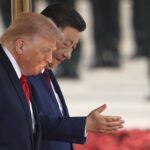
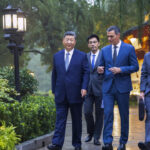
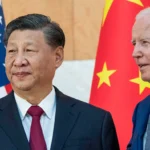
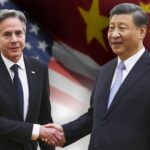
Xi Jinping ha abandonsdo Washington, after three days of unusual solemnity, even by the standards of diplomacy between the two great powers. Ceremonies, honors, a military display, a state dinner, and carefully crafted presidential staging surrounded the Chinese leader's first state visit to Washington in over a decade. Much symbolism, therefore. However In terms of concrete results, considerably less.
The tangible balance sheet can almost be captured in a photograph.. The United States and China have extended the trade truce, which was due to expire in November, for just two months, while negotiations continue to reach a broader agreement. Beijing He had hoped for a longer extension. He did not get it. As far as we know, tNor have there been substantial progress in the major disputes that separate the two countries, either Taiwan, artificial intelligence, technology, Iran, or security issues.
And yet, it would be premature to conclude that the summit has been irrelevant.
Because its main result may not lie in what has been signed or agreed uponbut in what has been confirmed, in other words, la confirmation of certain will shared, perhaps equally brief in its temporal dimension, to preserve a relationship of constructive strategic stability, the concept coined at the May summit in Beijing. At that time, Xi defined it as a relationship based on cooperation, competition within reasonable limits, manageable differences, and predictable peace.
Four months later, Washington has served to verify that that framework transcended toThe diplomatic formula. It doesn't resolve the rivalry, but progresses in establishing a way to manage it. And perhaps that, given the circumstances, is the most that can reasonably be expected.
The United States and China continue to be strategic competitors in virtually every major sphere of power., from the trade, technology, artificial intelligence, critical minerals, or in International influence and security. The differences are too deep to disappear with a presidential photograph. The issue, therefore, is not to end the competition but to prevent it from becoming an uncontrollable dynamic of confrontation.
In that sense, the pomp of Washington has had That one curious counterpoint as The more spectacular the staging, the more modest the results appear. But precisely that modesty can be significant. Today, the relationship needs less grand pronouncements than restraint.
Trump has offered Xi hospitality out of the ordinary. The american president says to place considerable value on personal diplomacy, the theatricality of the meeting and the possibility of turning a summit into a political event. Given his ego, he was probably thinking more about himself than his guest. Xi, for his part, seems far less impressed by the scenery. He can allow himself to be flattered without losing sight of what he considers essential.
And among those issues, Taiwan occupies a central place. Xi has once again placed the issue at the heart of strategic trust. BeijingThe problem is not just another issue on the bilateral agenda, but a material linked to its fundamental interests. US arms sales to the island, therefore, constitute one of the most sensitive indicators for assessing how far that stability can progress. Before the visit, Xi had specifically placed reducing those sales among his priorities.
One of the tests will be there. key in the coming months. If Washington were to significantly increase its military cooperation with Taiwan, the fragile architecture built since May could be jeopardized. If, on the other hand, a degree of restraint is observed, Beijing It would have a signal that it would interpret as compatible with the new stability framework.
Artificial intelligence offers a different scenario. It is significant that bothyour countries They have opened their first specific bilateral dialogue on this issue, but their positions remain far apart. Washington wants to preserve its technological advantage; Beijing It rejects any formula that could become an instrument of technological containment. There is dialogue, but no convergence.
Ultimately, that's probably the most accurate snapshot of the relationship. China is not succeeding in making US pressure disappear. But neither does it seem that the pressure has substantially altered China's strategic course. After tariffs, technological restrictions, and measures aimed at limiting Chinese capabilities, Washington finds itself facing a reality inunavoidable, which compels him to compete but also to negotiate with BeijingAnd the more evident the interdependence between the two economies becomes, the harder it is to turn rivalry into a policy of rupture. Neither containment nor decoupling.
Hence, one can speak of a gradual US adaptation to a competition management framework that China has long advocated. This does not mean that Trump has accepted the Chinese view, nor that Beijing has imposed its conditions. It means that Both need to find limits to a rivalry that neither is in a position to resolve with a mere snap of the fingers.
Trump also arrives at this moment with an extraordinarily busy international agenda, including the Iran war, and with his own domestic political needs. Xi is playing with la temporality of a longer-term strategy, in which each meeting serves to accumulate positions, preserve options, and carefully differentiate what is negotiable from what is considered immutable. That's why it might be best not to look to Washington for the grand agreement that never materialized. The key lies elsewhere.
The two presidents will soon sit down at the same table again.. PFirst at the APEC summit in Shenzhen and later at the G20 in Miami. There will be new opportunities to extend the trade truce, but also to see if the word "stability" translates into concrete actions. The crucial question then becomes how far that stability extends and what its price is.
In short, this time of the new relationship sThe Sino-American relationship seems to be moving towards a formula of competition within limits, rather than towards reconciliation. which seems unfeasibleAnd in that formula, China seems to be relatively comfortable well he It allows them to preserve their fundamental interests, maintain open economic and technological cooperation where possible, and at the same time, buy time to develop their own capabilities.
As expected, lThe summit has not resolved the rivalry. That wasn't the point. But it has confirmed that both parties are willing to manage it to ward off greater evils.
Xulio Ríos He is an emeritus advisor to the Observatory of Chinese Politics. He has just published "China, permanent modernization" (Txalaparta, 2026).
XULIO RIOS
- XULIO RIOS
- XULIO RIOS
- XULIO RIOS
- XULIO RIOS

- XULIO RIOS
- XULIO RIOS

- XULIO RIOS
- XULIO RIOS
- XULIO RIOS
- XULIO RIOS

- XULIO RIOS

- XULIO RIOS

- XULIO RIOS
- XULIO RIOS

- XULIO RIOS
- XULIO RIOS
- XULIO RIOS
- XULIO RIOS

- XULIO RIOS
- XULIO RIOS
- XULIO RIOS
- XULIO RIOS
- XULIO RIOS
- XULIO RIOS
- XULIO RIOS
- XULIO RIOS
- XULIO RIOS
- XULIO RIOS

- XULIO RIOS

- XULIO RIOS

- XULIO RIOS

- XULIO RIOS
- XULIO RIOS