
Yemen's Foreign Minister: "The Yemeni case is a clear example of US intervention in the region"
JAYRO SANCHEZ
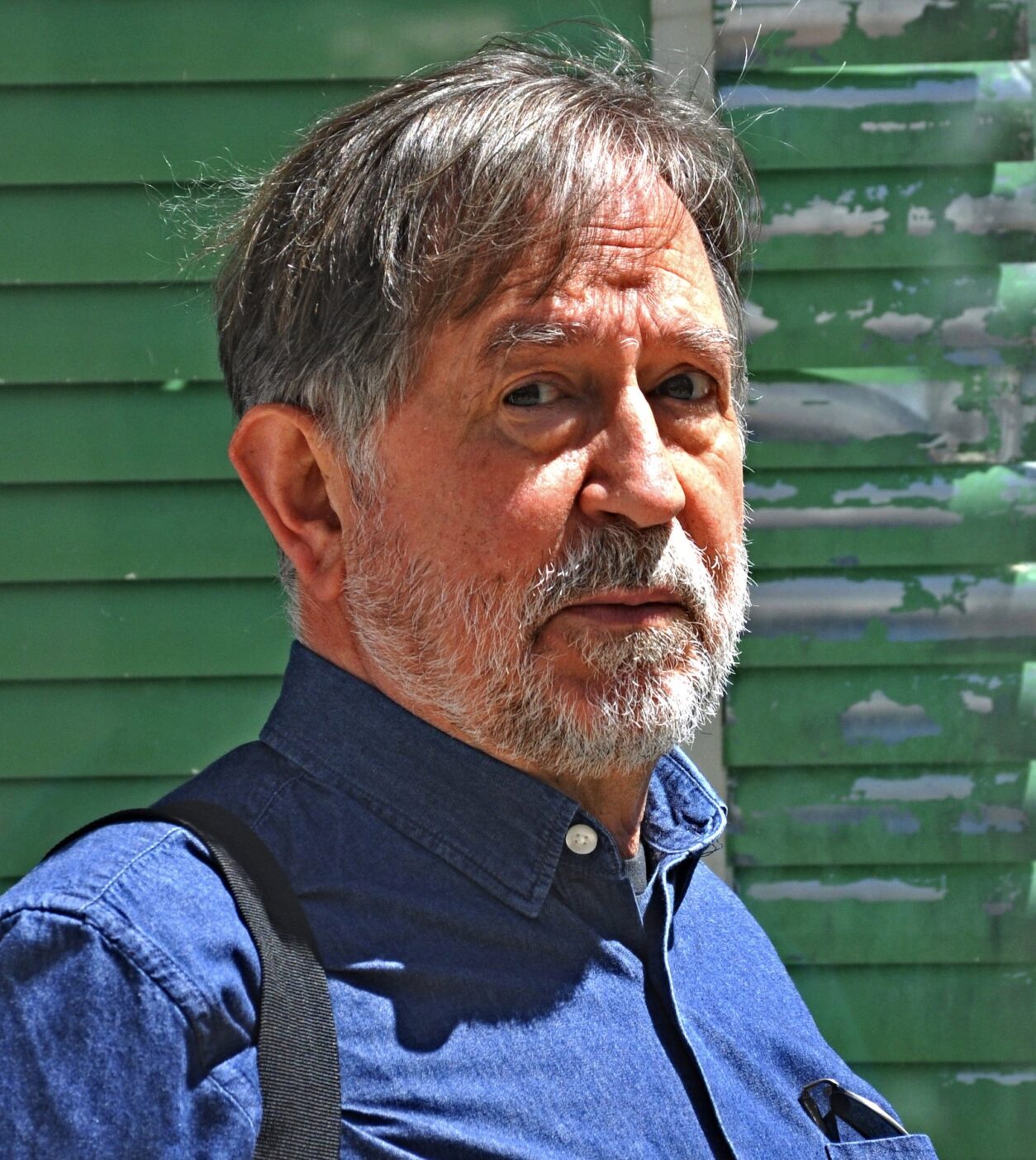
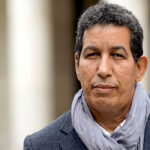
Abdulwahed Abu Ras is the Foreign Minister of the Yemeni government based in Sana'a. As one of the country's top political figures, he is the most authoritative voice to describe the crisis that has gripped Yemen for over a decade. We spoke with him about the civil war, the regional chaos in the Middle East, and his Cabinet's positions on Palestine and Syria.
A month ago, one of the many groups opposing his government, the Southern Transitional Council (STC), consolidated its position in southern and eastern Yemen by seizing control of the provinces of Hadramaut and Al Mahrah. Does the Sana'a government see any danger in these military movements?
The CST had considerable influence over those regions before its coup, but what no one is saying is that its insurrection collapsed in less than 72 hours. By then, its forces were already retreating in the south and in Aden, the city they claim as the capital of their illegitimate government. Even their leader, Aidarus al-Zoubaidi, fled by boat.
The group has been supported in its offensive by the United Arab Emirates, although full responsibility for the problems in Yemen lies with Saudi Arabia, which originated them.
Do you believe that the situation in the south of your country is the result of external intervention?
That's right. The plan of the separatists of the so-called Republic of South Arabia was conceived outside our territory. It's not an internal project. Our people have no connection to it whatsoever.
Therefore, we want to assure you that this so-called state was born in two days and, consequently, will die in an equivalent period of time. The blame lies with Riyadh, which seeks to exert its influence over our lands.
Hadramaut and Al Mahrah are occupied provinces, and we stand with the defenseless Yemenis who live there. The situation is clear. We call for firmness and calm.
The government led by Rashid al-Alimi and its Saudi partners were allies of the Southern Transitional Council (STC). However, they may be preparing military action to eliminate the remnants of this organization in Yemen. Could an escalation of violence in the south lead to a resumption of the civil conflict nationwide?
We don't believe it. Al Alimi, who fled to Saudi Arabia when the CST launched its coup, is an agent of the Saudi ambassador. And Al Zoubaidi, representing Emirati interests, also fled to Dubai when his troops lost the initiative.
The facts confirm the foreign aggression. The factions that have allied against our government should live under the same conditions as those of us who remain in our country. They have only made a pact among themselves for their own benefit.
The Emirati and Saudi governments are using these measures to seize Hadramaut's oil and other valuable resources. The only sovereign government in Yemen is the one in Sana'a.
None of our citizens understand why the international community doesn't fully recognize this reality. Other nations can't seriously consider Alimi president of the country, since he resides abroad.
Could the geopolitical dispute between the two largest regional powers on the Arabian Peninsula affect Yemen and its government?
Yes. The Yemeni people live in very poor conditions due to foreign actions. These have been going on for more than 10 years, and we have all suffered greatly. However, I can assure you that this is not a permanent situation, but a temporary one.
Yemen will achieve complete independence and freedom. The aggressors will leave our occupied territories. They have no legitimacy; Sana'a does. We have a very significant force in the Red Sea. For us, resolving the problems in the south is only a matter of time.
Is your government working on any kind of plan with the international community to bring permanent peace to your country?
Yes. We reached an agreement with Saudi Arabia some time ago. We developed a comprehensive plan to achieve peace with Riyadh, and Sana'a is the only country that has implemented it. We ask that your government cooperate in making it a reality.
In general, the problems that the Middle East has recently experienced are related to the influence of the US on Saudi Arabia and other countries in the region.
The Yemeni case is a clear example of US intervention in the region. Even so, our government offers every guarantee and opportunity to negotiate peace to those who desire it. We are willing to engage in dialogue with all internal and external actors. Our only demand is full independence and freedom for our people.
We have sent copies of a document outlining our proposals to the US National Security Advisor and the United Nations. We hope the international community will support our roadmap.
Your troops carried out attacks against various ships sailing in the Red Sea between late 2023 and early 2025. You have claimed that these actions were carried out in solidarity with the Palestinian people. Have they proven to be an effective measure to end the genocide?
Given the situation our brave Palestinian neighbors were facing, we made a series of decisions. First, we spoke with the countries surrounding ours and communicated to the international community that we had to act together to stop the extermination. We proposed options, but received no response.
So we proceeded to bomb certain areas of occupied Palestine to show our support for its rightful inhabitants. However, we ultimately ran into trouble with the Arab countries surrounding their territory.
Was that when they gave the order to monitor and block navigation in the Red Sea?
Only Israeli ships. We understand that if Israel blockades Palestine, its people must also suffer the consequences of a blockade. We do not act against foreign ships. Despite this, the US and some European countries, such as the UK, Germany, and France, have taken a negative stance on the Palestinian issue.
All these steps have had an effect on Israeli attacks in Palestine. We have succeeded in preventing their ships from reaching the port of Eilat. And, although we have taken serious measures, we believe that Israel's aggression against our Arab brothers justifies them. Gaza is a land of martyrs, the wounded, and the ostracized.
Tel Aviv is acting with the support and passivity of the international community. The recognition of the Palestinian state by many European nations remains merely symbolic. It will not stop the massacre; it is just ink on paper.
We believe that all countries in the world should have a very clear position on this issue. Yemen has already shown what its position is.
Do you believe it is still possible to agree on a stable and lasting peace in the region?
Only if Israel ceases to exist. All the land it occupies is Palestinian. The Jews who have arrived there in recent centuries have original nationalities: German, Russian, French, etc. And peace will not come until they leave. This peace existed before the creation of the State of Israel.
The Zionists have always wanted to expel the original population from their land and build homes for Israelis there. They have violated all the rights of the Palestinian people and have demonstrated that there is no possibility of coexistence with them. We have the necessary experience to affirm this.
The events of the past year in Syria are also of vital importance to Yemen. What kind of relationship does Sana'a intend to have with the new administrators in Damascus?
What has happened in Syria has been extremely complex. Sana'a has a very clear position regarding the Al-Assad family regime and is willing to talk with his successors.
We would like your foreign policy stance regarding the Palestinian people to align with ours. You must condemn the aggression of Zionist Jews against Palestine. If you do, we will support you.
So far, Syria has acted against its own interests by supporting Israel and its allies. But we believe its stance may change, given that Tel Aviv has not been content with simply seizing the Golan Heights and is expanding its influence into other Syrian provinces.
In any case, we would like to make clear our positive position regarding this new regime.
Jayro sanchez is a Spanish journalist
- Jayro sanchez

- Jayro sanchez

- Jayro sanchez

- Jayro sanchez

- Jayro sanchez

- Jayro sanchez

- Jayro sanchez

- Jayro sanchez

- Jayro sanchez
- Jayro sanchez
- Jayro sanchez

- Jayro sanchez

- Jayro sanchez
- Jayro sanchez
- Jayro sanchez

- Jayro sanchez
- Jayro sanchez

- Jayro sanchez