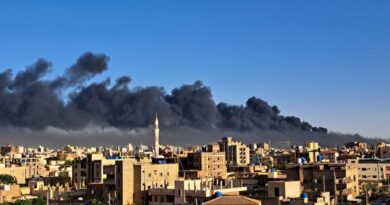
The Sudan war and foreign interference

EUGENIO GARCIA GASCON
The war that broke out on April 15, due to a conflict of egos, could be complicated if the generals leading the two sides, Abdel Fattah al Burhan, supreme commander of the army, and Muhammad Hamdan Dagalo, Hemedti, head of the Rapid Support Forces (FAR) -a powerful paramilitary formation not integrated into the army- gather the support they are looking for in other countries in the area and what until now is a local conflict turns into another of a regional nature.
Read more

Lula turns around Brazil's foreign policy

JUAN MIGUEL MUNOZ
São Paulo
The presidency of Luis Inácio Lula da Silva celebrated its first 100 days on Monday. More than three months in which the Government is dedicated to forging pacts in a Parliament in which it lacks a majority, is very divided and with groups that are very hostile to the Labor Party (PT) and its allied parties. But there is an issue in which the dependence on parliamentary agreements is much less: foreign policy, an area in which a radical turnaround can be seen with respect to the mandate of the far-right Jair Bolsonaro. The Lula Administration resumes the tradition of advocating multilateralism and mediating initiatives.

Read more

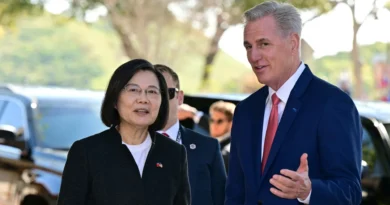
Tsai-McCarthy: a meeting in the electoral phase

XULIO RIOS
Although the White House has tried to downplay the meeting by assuring that "there is nothing atypical in that the presidents of Taiwan transit through the United States or in fact meet with members of Congress", the truth is that this was the first time that a meeting of this nature has been taking place on US soil since the break in diplomatic relations in 1979. Which is certainly rare.

Read more

"You to Boston and I to California"

XULIO RIOS
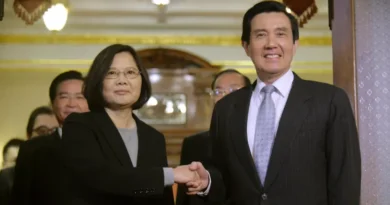
Chance (or not) has meant that the imminent trip of President Tsai Ing-wen to Central America, with stops in the US, coincides with that of former President Ma Ying-jeou to mainland China. In both cases, there is a strong symbolic charge, but it also highlights the political priorities of the two options that are fighting to determine the immediate future of Taiwan.

Read more

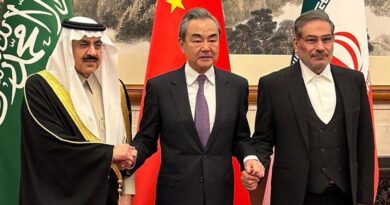
A new multipolar Middle East

JAVIER GARCIA
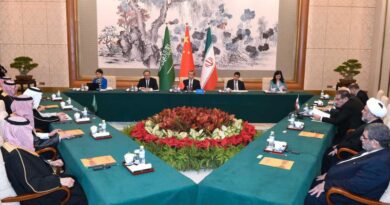
The agreement between Iran and Saudi Arabia, sponsored by China - which could also put an end to the war in Yemen shortly - is an event of special historical relevance and a clear example of how conflicts can be resolved in a multipolar world not constrained by the designs of a single hegemonic power. A model that they were certainly not used to in the region. China has emerged, to everyone's surprise, as the mediator that the Middle East needed. Something that for the United States, clearly aligned with one of the sides, has become totally impossible.

Read more

The deafening silence of the intellectuals

BOAVENTURA DE SOUSA SANTOS
Intellectuals do not have a monopoly on culture, values ​​or truth, much less on the meanings attributed to any of these “domains of the spirit,” as they used to be called. But intellectuals should not refrain from denouncing what they consider to be destructive of culture, values ​​and truth, especially when such destruction is intended to be carried out in the name of these “domains of the spirit.”

Read more

The traitors to Julian Assange

JOHN PILGER
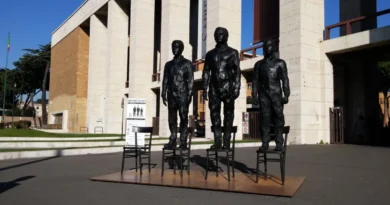
I have known Julian Assange since I first interviewed him in London in 2010. I immediately liked his dry, dark sense of humour, often dispensed with an infectious chuckle. He is a proud outsider: sharp and thoughtful. We've become friends, and I've sat in many a courtroom listening to state tribunes try to silence him and his moral revolution in journalism.

Read more

Iran and Saudi Arabia restore their bilateral relations in Beijing

EUGENIO GARCIA GASCON
Iran and Saudi Arabia announced this Friday the reestablishment of bilateral relations that both countries abruptly interrupted in 2016. The agreement was reached in Beijing, so that China scores a significant diplomatic goal through which it continues to establish its influence in the Middle East to the detriment of from United States. Surprised by the announcement, in Washington they reacted shortly after with an uncomfortable, lukewarm and inconsequential response.

Read more

Dagdelen: the German government is incapable of prioritizing the interest of its population over its vassal relations with the US

JAYRO SANCHEZ
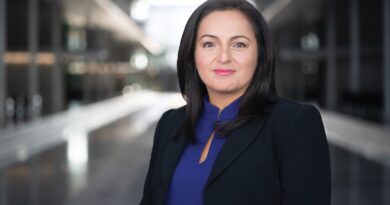
Sevim Dagdelen, the daughter of Kurdish immigrants in Germany, is the spokesperson for International Relations for the Die Linke parliamentary group, the main left-wing political force currently in the country. Videos of her interventions in the Bundestag on the war in Ukraine have gone viral on the internet.

We interviewed her exclusively to talk about the German participation in the conflict and the attack on the Nord Stream gas pipelines, vital for the supply of Russian energy to the main European power. Dagdelen considers that the leaks after the meeting between Scholz and Biden, about the alleged authorship of a pro-Ukrainian group, contradict all previous reports provided to Parliament by the German government, according to which only state agents can be the perpetrators of an operation of this magnitude. .

Read more

Marx as a solution to the climate crisis

PASCUAL SERRANO 
“Are you taking any action against global warming? Have you bought ecological bags to reduce the use of plastic ones? Do you always carry a canteen to avoid buying drinks in PET containers? Have you changed your old car for a hybrid one?
I will tell you clearly: only with that kind of well-intentioned measures you will not get anywhere; what's more, they could even be counterproductive”.

With these provocative words begins the book by the Japanese Kohei Saito "Capital in the era of the Anthropocene" (Editions B, 2022), an era in which the footprint of human activity completely covers the face of the Earth.

Read more

Chomsky: a stronger NATO is the last thing we need

CJ POLYCHRONIOU
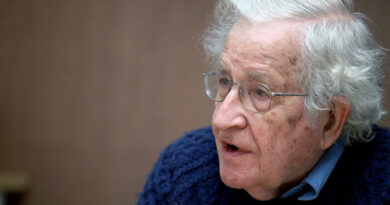
Noam Chomsky, one of the world's most cited academics and regarded by millions as an international intellectual treasure, remains prodigiously lucid at 95. In this interview - published in collaboration with Truthout - the eminent professor flatly rejects the idea that a stronger NATO is needed instead of a negotiated solution to the Ukraine conflict and warns about the current strategy of "much worse" and the ever-increasing risk of escalation towards nuclear war.

Read more

The Ukrainian tragedy

RAFAEL POCH-DE-FELIU
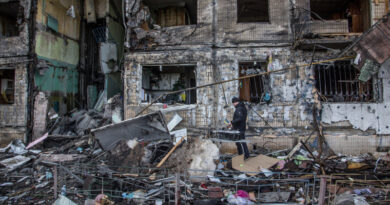
One of the problems with the war in Ukraine is that we are not facing one war, but several. There is a reactionary war of Russia against Ukraine, open since the invasion of February 2022. There are elements of civil war between Ukrainians since the spring of 2014, caused by the non-recognition of the valuable internal diversity of Ukrainians in their different regions, without which the Russian invasion would have been very difficult, if not impossible. There is a war of hegemonism between NATO and Russia, without which the two previous ones surely would not have come to fruition, sponsored by the United States with its expansionist pressure towards the East since the false closing of the cold war thirty years ago. And there is a warming up of a great global war with China to neutralize its rise as leader of a non-Western pole in the world and of which the war in Ukraine is the prolegomenon.

Read more