Shooting Europe in the foot with sanctions against Russia
PASCUAL SERRANO
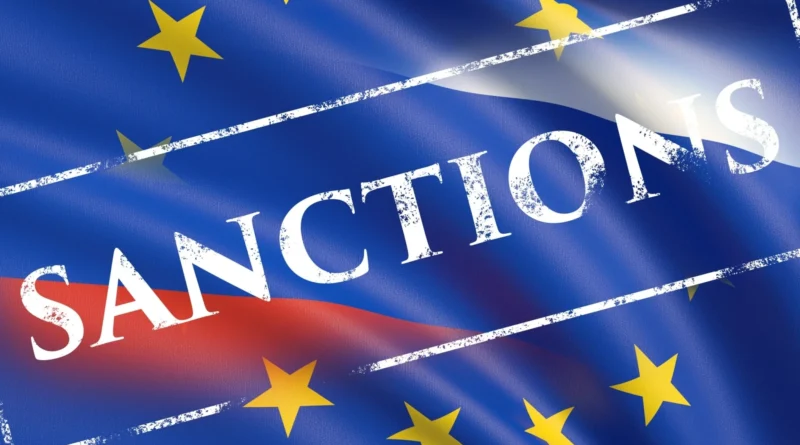
For several years, even before the start of Russia's military intervention in Ukraine, the European Union has been applying economic sanctions against Russia with the conviction that, in this way, they would achieve the collapse of its economy, generate social unrest and that would facilitate achieving its great objective, the fall of Putin's government.
The sanctions They started already in March 2014 and from the beginning they caused problems for the Europeans. The limitation of trade relations meant a significant loss of income for European farmers who cannot sell their products to Russia, or the limitation of visas for Russian tourists, with the impact that this entails on tourism, among others.
But it was from the beginning of the 2022 conflict when a whole cascade of new sanctions pulverized the entire commercial, financial and international relations structure with which we were living. Since then, practically every month the European Commission approved more sanctions against Russia.
These sanctions included, among many other things, the ban on entry of all senior Russian officials and deputies, the ban on transactions with the Central Bank of Russia, the ban on overflight of EU airspace and access to airports. of the EU by Russian companies of all types, the same ban on European ports, the exclusion of Russian banks from the SWIFT international financial system, the ban on the dissemination of Russian media, the end of imports or exports of Russian oil or gas, as well as any financing to a Russian company. The sanctions were also extended to Belarus, which had not committed any international violations, and all companies or citizens that violated these measures were declared subject to sanctions.
The idea of the European authorities was that, in a few months, Russia's economic situation would collapse, as it would no longer be able to sell its gas, oil or trade with Europe.
On March 1, 2022, the French Minister of Economy, Bruno Le Maire, boasted: “The sanctions are effective, the economic and financial sanctions are even terribly effective […] We are going to cause the collapse of the Russian economy.”
But the result began to be very different:
Germany, the engine of European industry, was left without energy when the Nord Stream I and Nord Stream II gas pipelines were paralyzed. The gas went from being available at a tap next to Europe, to coming from the United States, extracted through fracking, a method that was much more polluting and, in addition, had to be liquefied to be transported by ship across the entire ocean.
The European companies that had pending shipment of goods to Russia had to leave them unsold, because the measures against crossing the borders did not allow it, and those that had pending payment were left without collecting, because the regulations did not allow it. banking sanctions.
The tourist areas where wealthy Russians used to settle were left without their income.
European airlines flying to Asia now had to go around Russia, because they could not enter its airspace; Likewise, Asians also had to make a detour to come to Europe.
As the entry of Ukrainian agricultural products was also rewarded to favor the Zelensky regime, serious tension was generated with Polish farmers and other nearby countries who saw the price of their products plummet in the markets.
One of the characteristics of international sanctions against a country is that, if the destabilizing effect is not achieved within a few months, the sanctioned nation can seek alternative methods to restore its economy and trade. And that's what happened with Russia.
Some naive European voices claimed that Russia would collapse in a few months, in short, it was a country with a GDP similar to Italy or little more than that of Spain, it was not a great economic power. The problem with this calculation is that the figure for the Gross Domestic Product (GDP) of a country does not say much if it is not specified how it is achieved, that is, through what economy or production it generates its wealth. Earning income to survive through sun and beach tourism (in the case of Spain) is not the same as achieving it by providing gas and oil to the world. That world can do without Spanish tourism, but not so much with Russian energy, which did not lack customers. And let's not say if your economy is sustained by mere speculative finance, without a good industrial production structure.
The results of the sanctions began to be seen shortly after. The trade balance of the euro zone went from positive 116.000 billion in 2021 to negative 400.000 billion in 2022.
Just like Economist Juan Torres has pointed out, “the behavior of the Russian economy, which so many thought was dead in a few months due to the war and sanctions after the invasion of Ukraine, has been a test of cotton: only countries with a powerful industrial base, with focused economies in the material production of productive goods and services, they can face the war of our days with a certain security, without activity and income sinking and collapsing.”
Emmanuel Todd in his book The Defeat of the West, remembers that Russia, together with Belarus, only represents 3,3% of Western GDP. The difference is that Russia's GDP is made up of tangible goods and not like that of the United States, which comes from activities that are difficult to define and that it is not known whether to classify as useless or unrealistic.
Torres continues by recalling that, in Europe, “for decades (not only after the crisis), austerity policies have been imposed that have produced a growing loss of activity, very low rates of economic growth and the progressive deindustrialization of the Union in as a whole and even of the great powers like Germany. The best proof of this is that the latter's industry represented 1991% of its GDP in 30,2 and 36,8% if construction was included. At the end of 2023, Those percentages were 18% and 24,2% respectively.”
Last September, the French Le Monde revealed some interesting economic data that shows the collapse that Europe has entered compared to the United States.
In 2008, the euro area and the United States had a GDP at equivalent current prices of 14.200 and 14.800 million dollars respectively (13.082 and 13.635 million euros). Fifteen years later, that of Europeans barely exceeds 15.000 billion, while that of the United States has skyrocketed to 26.900 billion. That is, the GDP gap is 80%!
The data comes from the European Center for International Political Economy, a think tank based in Brussels, which has published a classification of the GDP per capita of American and European states. According to the ranking, Italy is just ahead of Mississippi, the poorest of the fifty American states, while France is between Idaho and Arkansas, which are ranked 48th and 49th among American states in order of wealth. And Germany is between Oklahoma and Maine, which are 38 and 39. Already on August 11, the British were scandalized when they learned that They were as poor as Mississippi.
On 17 July, The Wall Street Journal made it clear: "Europeans face a new economic reality that they have not known for decades: they are increasingly poorer." And he made the following review: “The French eat less foie gras and they drink less red wine. The Spanish skimp on olive oil. Finns are urged to use saunas on windy days when energy is less expensive. Across Germany, meat and milk consumption has fallen to the lowest level in three decades and the once-thriving organic food market has collapsed. “Italy’s Economic Development Minister Adolfo Urso called a crisis meeting in May over prices of pasta, the country’s favorite staple, after they rose more than twice the national inflation rate.”
Among the reasons for these changes, the American economic newspaper refers to “Russia's prolonged war in Ukraine. By disrupting global supply chains and skyrocketing energy and food prices, the crises aggravated ailments that had been festering for decades.”
Just one clarification, it is not the war, it is the sanctions imposed by Europe on Russia that are to blame. The development of the war would not have any effect on supplies of energy or food. If Russia needs anything, it is to continue selling cereals, fertilizers and energy. Meanwhile, the paper says, “Americans, on the other hand, benefited from cheap energy.” As if to have doubts about who was benefiting from the blowing up of the Nord Stream gas pipelines.
It seemed that Europe, with its sanctions, was punishing its own companies that could no longer trade, receive energy or have subsidiaries in Russia. Todd compares Europe's reaction to that of an angry child who, to show his anger, breaks his own toys.
The reality is that in Europe inflation has skyrocketed, salaries have frozen and, therefore, citizens' purchasing power has fallen. The European Union now accounts for about 18% of all global consumer spending, compared with 28% for the United States. 15 years ago, the EU and the US each accounted for around a quarter of that total.
According to the European Center for International Political Economy, if current trends continue, by 2035 the gap between per capita economic output in the US and the EU will be as large as that currently exists between Japan and Ecuador, according to the report. .
The shot in the foot that Europe has given itself with the sanctions against Russia is already recognized by Western economic publications. “Russia's economy continues to demonstrate unusual resilience. "Faced with the forecasts that predicted a historic drop in GDP in 2022 and a tortuous path for years, international organizations and banks are beginning to admit reality," They affirm in El Economista.
During 2023, the Eurozone GDP rose a ridiculous 0,4% and Germany fell 0,3%; while that of Russia rose 3,6%. In reality, the rest of the world that did not sanction Russia also did well, Venezuela rose more than 5% y China 5,3%.
The IMF recently revised its growth outlook for Russia to 3,2% in 2024, above the US (2,7%) or the euro zone (0,8%).
From JP Morgan to the Organization of the Petroleum Exporting Countries, everyone stressed that “Russia was exhibiting solid growth in 2023… Russia could exceed expectations with improvements in domestic demand and foreign trade,” according to the organization’s report. Moscow has been showing signs of recovery for months that are now materializing in a notable way.
Although it is true that trade has declined due to import bans on many goods, Russia has begun to replace them with national production or by purchasing them from other economies. This, in part, has provided a stimulus for domestic demand and the Russian labor market.
Bank of Russia experts also point out that the increase in private demand is due to the growth of consumer activity, which is driven by the increase in real wages and high credit growth. In addition, there is a significant increase in company profits, which is increasing positive business sentiment (more investment and hiring), also thanks to fiscal stimuli, which supports high investment demand.
Let us not forget that the policy of sanctions against Russia has caused a whole new reconfiguration of the world economic system in which the big losers are the European Union and the United States. Some examples:
The takeoff of the BRICS is being spectacular and they have shown that they are capable of creating a new economic world where they have more natural resources, greater economic growth and the firm decision to move towards their independence from the West.
De-dollarization is advancing at gigantic steps, the days when the West appropriated the currencies of the countries it sanctioned are over, because they were kept in dollars.
The SWIFT international banking exchange system is also in decline, there are more sanctioned countries that operate on the margins (from Russia to Venezuela) than those that integrate this model.
Trade routes have changed, Russian oil and gas now goes to China and India, they do not need the European market.
The result is that the unemployment rate in Russia is at 3%, historical lows in its economy. The lack of workers is causing wages to rise sharply. According to the latest data from the Russian statistics service, nominal wages are increasing at a rate exceeding 11%, while inflation stands at 5,2%. This means that the real salary of Russians is rising by more than 6%, probably one of the most powerful increases in all of Europe. That is, less unemployment and higher salaries for Russian workers than in the countries of the European Union.
Let us not forget that, in addition, the Europeans must now be paying to send aid and weapons to Ukraine, a total of 136.960 million euros, the last approved item is 50.000 billion in the next four years. They must also face the skyrocketing growth of their Defense budget due to NATO demands; in the last year alone it has increased by 10%. All this is less public resources for infrastructure, social benefits, health or education.
Time has shown ridiculous statements in July 2022 by Josep Borrell on the sanctions: they are "having an effect." Or those of February 2023: they are “arsenic-based poison” and “irreversible.”
Todd points out that “it is easy to understand why liberal [European] oligarchies have adopted economic sanctions as a means of war: it is the lower layers of Western societies [and not those oligarchies] that suffer the most from inflation and falling standards.” of life".
The reality is that the only thing they are poisoning is the European economy.
Pascual Serrano He is a journalist and writer. His last book is "Forbidden to doubt. The ten weeks in which Ukraine changed the world”
PASCUAL SERRANO
- PASCUAL SERRANO
- PASCUAL SERRANO
- PASCUAL SERRANO

- PASCUAL SERRANO

- PASCUAL SERRANO

- PASCUAL SERRANO

- PASCUAL SERRANO

- PASCUAL SERRANO

- PASCUAL SERRANO

- PASCUAL SERRANO

- PASCUAL SERRANO

- PASCUAL SERRANO

- PASCUAL SERRANO

- PASCUAL SERRANO

- PASCUAL SERRANO
- PASCUAL SERRANO

- PASCUAL SERRANO
- PASCUAL SERRANO

- PASCUAL SERRANO

- PASCUAL SERRANO
- PASCUAL SERRANO

- PASCUAL SERRANO
- PASCUAL SERRANO
- PASCUAL SERRANO
- PASCUAL SERRANO
- PASCUAL SERRANO
- PASCUAL SERRANO
- PASCUAL SERRANO
- PASCUAL SERRANO

- PASCUAL SERRANO
- PASCUAL SERRANO
- PASCUAL SERRANO

- PASCUAL SERRANO
- PASCUAL SERRANO
- PASCUAL SERRANO

- PASCUAL SERRANO

- PASCUAL SERRANO

- PASCUAL SERRANO
- PASCUAL SERRANO