The end of French neocolonialism in Africa?
ZOE ALEXANDRA AND VIJAY PRASHAD
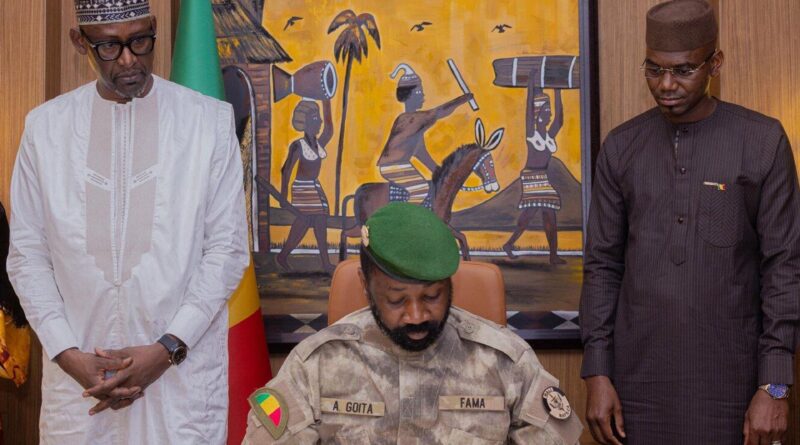
In Bamako, the Malian capital, the governments of Burkina Faso, Mali and Niger they created this September 16 the Alliance of Sahel States (AES).
On X, the social network formerly known as Twitter, the leader of Mali's transitional government, Colonel Assimi Goïta, wrote that the Liptako-Gourma letter, signed by the members of the AES, would establish “an architecture of collective defense and mutual assistance for the benefit of our populations.”
Attempts to establish such regional cooperation originated in the period when France ended its colonial rule in Africa. Between 1958 and 1963, Ghana and Guinea were members of the Union of African States, an organization that may have been the seed of a broader pan-African unity. Mali also belonged to it between 1961 and 1963.
But, in recent times, these three countries and others from the Sahel region, such as Niger They have fought against their common problems, such as the chaos unleashed by radical African Islamic forces, reinforced after NATO's intervention in the Libyan war in 2011.
The indignation of the regional population against France is so intense that it has provoked at least seven coups d'état in Africa (two in Burkina Faso, two in Mali, one in Guinea, one in Niger and one in Gabon) and has unleashed massive demonstrations since Algeria to the Congo, and more recently in Benin.
The hostility that the inhabitants of the area exhibit towards France is such that its troops have been expelled from the Sahel, Mali has eliminated the official linguistic status of French in its territory and the French ambassador to Niger, Sylvain Itté, has been held “hostage”—as has said French President Emmanuel Macron.
President of the West African People's Organization (WAPO), Philippe Toyo Noudjenoume, explains the basis of this emerging anti-French trend in the region. French colonialism, he says, “did not go away in 1960.” France keeps the income from its former colonies in the Banque de France in Paris.
The foreign policy that the French applied in Africa—known as françafrique— included the presence of French military bases from Djibouti to Senegal and from the Ivory Coast to Gabon.
"Of all the former colonial powers in Africa,” says Noudjenoume, “it is France that has launched military interventions on at least six occasions to overthrow governments. Modibo Keïta in Mali in 1968, Félix-Roland Mmié in 1960 and Ernest Ouandié in 1971 in Cameroon, Sylvanus Olympio in Togo in 1963, Thomas Sankara in 1987 in Burkina Faso… and many others.”
Between 1997 and 2002, during the presidency of Jacques Chirac, France deployed its troops to the African continent 33 times. By comparison, between 1962 and 1995, he did it 19 times. In reality, it has never let go of its former colonial ambition.
Breaking the camel's back
Two events in the past decade “broke the camel's back,” says Noudjenoume: the NATO war in Libya, led by France and started in March 2011, and the French intervention to remove Koudou Gbagbo Laurent from the Costa presidency. of Ivory a month later.
"For years,” he explains, “these events have provoked strong anti-French sentiment, especially among young people. A sentiment that has not only developed in the Sahel, but has spread throughout French-speaking Africa. Although it is true that it is in the Sahel where it is expressed most strongly today.”
Massive protests against the presence of the French in their former African colonies are now evident. Such protests have not been able to result in the return of power to civilian governments. In large part, this is because the political apparatus of those countries has been eroded by long-standing kleptocracies backed by France.
The best example of this type of regime is that of the Bongo family, which ruled Gabon between 1967 and 2023. Its members became rich by absorbing the profits generated by the country's oil wells and, when Omar Bongo died in 2009, French politics Eva Joly said that he governed in the name of France, not in that of the Gabonese citizens.
Paris also sent troops to Mali in 2013 to try to control the chaos unleashed by NATO's war in Libya two years earlier. Radical Islamist militias captured half of Malian territory and, in 2015, launched an attack on Burkina Faso.
France intervened, but then ordered soldiers from the armies of the Sahelian countries to fight the terrorists it had itself supported in Libya.
"This decision increased hostile feelings towards France among the African military,” says Noudjenoume, “and that is why they have rebelled against the pro-French governments and overthrown them.”
Anti-intervention
After the coup in Niger, the West hoped to send a force by delegation led by the Economic Commission of West African States (ECOWAS), but African military leaders have opposed it.
The inhabitants of the region have created solidarity committees to defend the people of Niger from any attack, and the threat has caused “revolts and indignation among the populations,” explains Noudjenoume.
The president of Nigeria, Bola Ahmed Tinubu, has been forced to back down from the ECOWAS crusade due to the rejection of his country's Congress and the massive protests against military intervention in the neighboring country. With ECOWAS ultimatums to reinstate deposed Nigerien leader Mohamed Bazoum having expired, it has become clear that his threat was a bluff.
Meanwhile, the Nigerien people, who already planned to resist any enemy on their own, have received help from Burkina Faso and Mali, which have promised to send immediate aid to Niger if any foreign troop deployment occurs. The new AES is a product of this mutual solidarity.
It is clear that it is not a simple military or security pact. At the signing ceremony, Malian Defense Minister Abdoulaye Diop said to journalists: “This alliance will be a combination of military and economic efforts between the three countries.”
The AES will be based on the agreement February 2023 between Burkina Faso, Guinea and Mali to collaborate on the exchange of fuel and electricity, the construction of transport networks, the sale of mineral resources and the development of a regional agricultural and commercial project.
It remains to be seen whether these countries will be able to create an economic agenda that benefits their people and thereby ensure that France has no means to exert its authority over the region.
Zoe Alexandra is co-editor of People's Dispatch
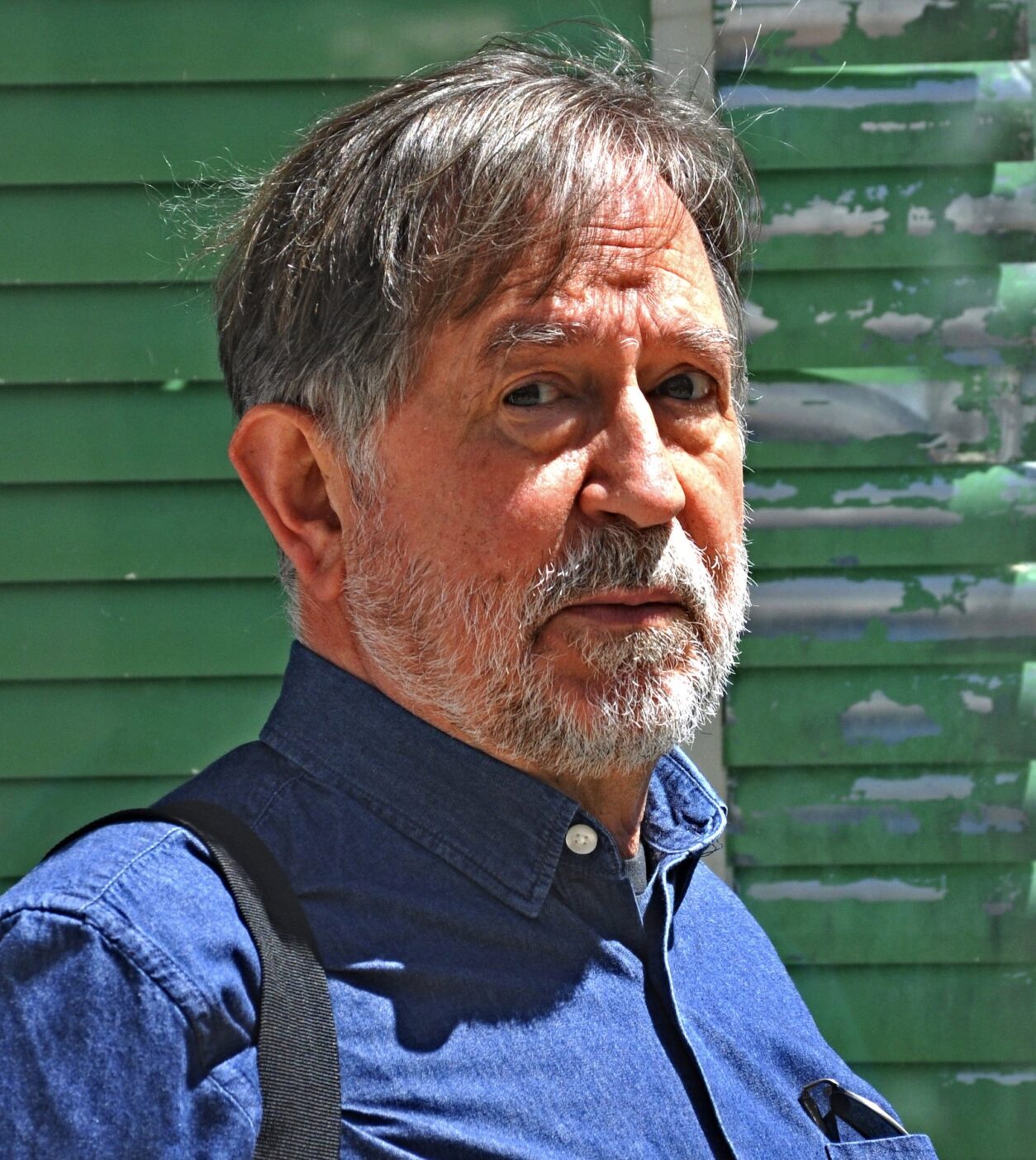
Vijay Prashad is an Indian historian and journalist. Director of the Social Research Institute tricontinental. He has written more than 20 books. The last one in collaboration with Noam Chomsky: "The retreat. Iraq, Libya, Afghanistan and the fragility of US power., reviewed by David Bollero at Globalter.
This article is published in collaboration with Globetrotter
-
VIJAY PRASHAD

-
VIJAY PRASHAD

-
VIJAY PRASHAD

-
VIJAY PRASHAD

-
VIJAY PRASHAD

-
VIJAY PRASHAD

-
VIJAY PRASHAD

-
VIJAY PRASHAD