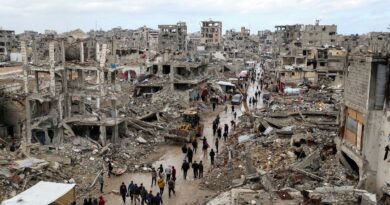
The tragedy of Gaza and its uncertain fate

EUGENIO GARCIA GASCON
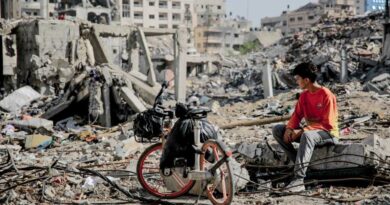
October 10th marked the one-year anniversary of the ceasefire between Israel and the Palestinian militias in the Gaza Strip. During those twelve months, only Hamas and the other militias have observed the truce; Israel has not. In this period, nearly 1.500 Palestinians have been killed as a result of Israeli attacks, meaning that, on average, more than four Palestinians, mostly civilians, have died every day.

Read more

The pomp and reality of strategic stability

XULIO RIOS
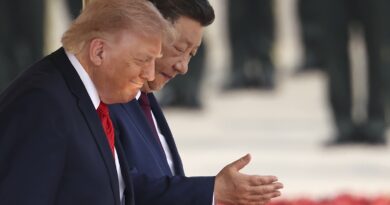
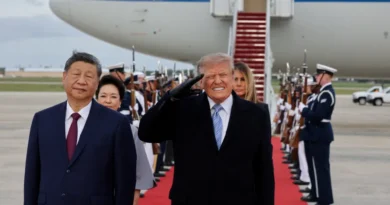
Xi Jinping has left Washington after three days of unusual solemnity, even by the standards of diplomacy between the two superpowers. Ceremonies, honors, a military display, a state dinner, and meticulous presidential staging surrounded the Chinese leader's first state visit to Washington in over a decade. Much symbolism, therefore. But in terms of concrete results, considerably less.

Read more

Artificial intelligence and China's new modernization

XULIO RIOS
Artificial intelligence has become one of the main arenas of global technological competition. China, the United States, and the European Union share the conviction that this is a technology of strategic importance, but they differ substantially in their understanding of its development, regulation, and relationship with the state.

In the Chinese case, AI should also be considered as a part of that broader project which is national modernization.

Read more

The floods in Nepal and the imminent extinction of the Himalayan glaciers

JOHN COLE
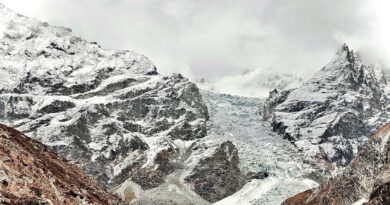
Climate change devastated towns and villages in Nepal on August 26 with massive flash floods triggered by glacial meltwater. The magnitude, speed, and relentlessness of those monstrous waters shocked everyone who saw the videos.

Hundreds of people have died, and thousands are likely missing. What's most frightening is that these floods are just the beginning, as we are rapidly heating the Earth by burning coal, fossil gas, and oil in such massive quantities that we release 38.100 billion metric tons of carbon dioxide—a dangerous greenhouse gas—into the atmosphere every year.

Read more

For the first time, polls reveal more international support for China than for the United States

PASCUAL SERRANO
The perception of China has improved in recent years, while that of the United States has worsened, to the point that China is now viewed more positively than the United States in most of the 36 countries surveyed. This is according to a Pew Research Center report comparing people's perceptions of the United States and China around the world. The results are based on surveys of 42.151 adults conducted between February 8 and May 13, 2026.

Read more

How the global food economy is killing children

VIJAY PRASHAD
Every year, unsafe food causes 866 million cases of illness and 1,5 million deaths; children suffer almost a third of these. This is the predictable result of a food economy organized around profits, not the right to food.

Nearly one in nine people worldwide become ill from consuming contaminated food, and the regions of Africa and Southeast Asia together account for almost three-quarters of all foodborne illnesses and 60% of deaths worldwide.

Read more

The summit of the warning

XULIO RIOS
The Xi-Trump summit in Beijing was surrounded by an ostensibly optimistic tone and carefully choreographed diplomacy, but the actual outcome calls for considerably more caution. Beyond the imagery and solemn declarations, there were no truly decisive announcements in either trade or technology, precisely the areas where the structural rivalry between the United States and China is currently concentrated. In fact, the fact that the preliminary negotiations dragged on practically until the last minute in Seoul suggests that the differences remain deep and difficult to manage.

Read more

How is Cuba experiencing the energy blockade?

PASCUAL SERRANO
Havana
Everyone seems outraged by Trump, his geopolitical interpretations, his political measures, and his wars. However, both politicians and mainstream media then agree with him that the situation in Cuba is desperate and on the verge of collapse. The scenario they promote is that of a failed state so that a military intervention can be interpreted not so much as aggression, but as salvation or, at the very least, something that cannot worsen the situation.

Read more

Artificial intelligence threatens to increase inequality

STEVE SEAMAN
A quarter of the world's population, 2.200 billion people, still lack internet access, according to data from the International Telecommunication Union (ITU). This digital divide risks widening with the rise of Artificial Intelligence.

In 2025, 85% of urban residents used the network, but almost half of the rural population (58%) still did not.

Read more

End Israel's war against peace

JEFFREY SACHS AND SYBIL FARES
A two-week ceasefire has partially halted the Israeli-American war against Iran. The war achieved absolutely nothing that a competent diplomat could not have accomplished in an afternoon. The Strait of Hormuz was open before the war and is now open again, but under greater Iranian control.

Meanwhile, the chaos continues. Israel is determined to break the ceasefire, as this was an Israeli war from the start.

Read more