How is Cuba experiencing the energy blockade?
PASCUAL SERRANO
Havana
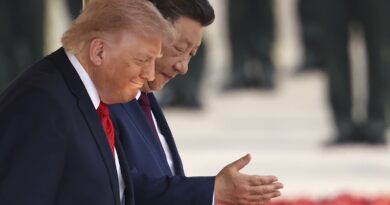
Everyone seems outraged by Trump, his geopolitical interpretations, his political measures, and his wars. However, both politicians and mainstream media then agree with him that the situation in Cuba is desperate and on the verge of collapse. The scenario they promote is that of a failed state so that a military intervention can be interpreted not so much as aggression, but as salvation or, at the very least, something that cannot worsen the situation. The objective, as Belén Gopegui says, is to implant the idea that "Y"There's nothing to be done," just wait for the arrival of imperialism.
We have been to Cuba, we have seen, observed, asked questions, and taken notes. We have discovered a people battered and suffering from the energy blockade, but with a government that is managing the situation and citizens who are moving forward.
The first point to consider is that Cuba has been subjected to an energy embargo, which has prevented the island from receiving a single drop of oil for four months. This oil was previously imported from Mexico and Venezuela. As a consequence, they have been left... The island's thermoelectric plants lack the raw materials to operateIt's surprising how the world was outraged by the food aid blockade Israel imposed on Gaza, but blocking access to energy is just as suffocating for an economy and just as criminal for a country. Can you imagine what would happen to Spain if not a drop of oil or gas were allowed to reach it? Or to an island like the Dominican Republic, next to Cuba? Imagine blocking the Dominican Republic's access to... 50 or 60 million barrels per year that reach him, or Japan imports 2,8 million barrels a day. And when those countries are unable to develop due to a lack of that energy, they'll say that capitalism doesn't work.
The first paradox is that the Trump administration says Cuba is a failed state, but precisely because there is a state presence in the organization of society, the energy deficit is being managed. The Cuban state has classified areas according to energy priorities, which they call circuits with levels of importance, giving the highest priority to areas with hospitals or healthcare facilities, schools, fire stations, food industries, and so on. In these protected zones, the electricity almost never goes out.
Similarly, the Cuban government is prioritizing healthcare, educational, and social service centers for the installation of solar panels. In a race against time, and with assistance from China, solar systems supplying energy to healthcare facilities and hospitals are being inaugurated daily.
Regarding gasoline distribution, the criteria are also social; public services have a guaranteed supply, as do agricultural production and strategic companies, while private use has less fuel available at a very high price.
Similarly, the State plans territorial connections and disconnections in its thermoelectric power plants to ensure the distribution of supply and prevent the system from collapsing due to demand exceeding available electricity.
It is the State's planning that has allowed the 730.000 barrels of crude oil ("a third of what we need in a month," in the words of President Díaz-Canel) that arrived on the Russian ship Anatoly Kolodkin on March 31 to be stretched and optimized to the maximum to generate 800 or 1.000 MW, a third of everything that is needed at peak times.
Unlike in our countries, where an energy price increase instantly translates into inflation and price hikes, in Cuba there is no increase in the prices of basic necessities. This is because the state maintains a fixed price for energy production, and there are no distributors who can speculate or hoard. Furthermore, imported products have no reason to increase in price because they are not affected by any energy blockade.
The United States government is proposing to allow fuel imports, but only for the private sector—that is, for wealthy individuals and private companies, regardless of their size. In other words, it wants to eliminate the social and strategic criteria of the Cuban state. Without a state to prioritize needs and coordinate supply connections and disconnections, individual demands would cause the system to constantly collapse.
He says it's a failed state, but what he really wants is to deactivate it because he knows it's not a failed state at all.
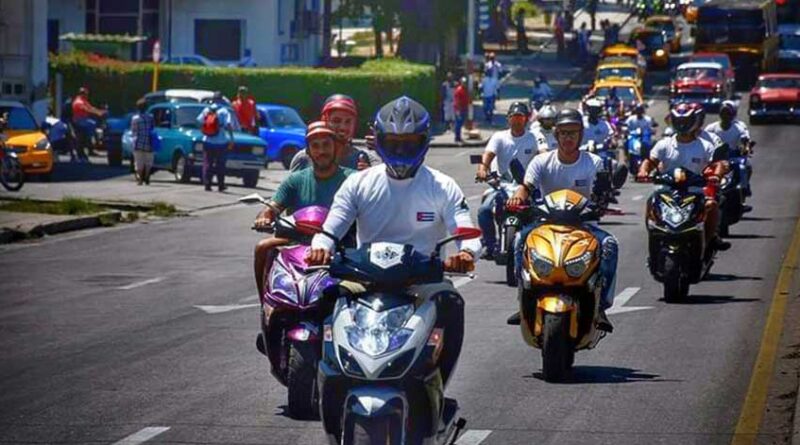
The initiative of ordinary Cubans is also noteworthy. Havana's streets are filled with Chinese electric motorcycles, and even tricycles that can carry up to six people, which have already replaced most gasoline-powered cars and, above all, taxis. These motorcycles, which are solving Havana's transportation problem, cost around $600 or $700, a significant amount for a Cuban, but it's worth remembering that they have spent their entire lives paying a minimal amount for electricity, less than a dollar a month. Now, recharging their motorcycles' batteries at home is practically free.
On the other hand, many homes already have solar panels to ensure their energy self-sufficiency. It's curious that we Spaniards are being forced into this energy transition to cope with the sanctions we ourselves imposed on Russia and the resulting increase in gas prices. Cuba is doing the same, but due to the US embargo.
The disruption to transportation means many workers are staying with friends and family to avoid the daily commute, or they're taking food and laundry to the refrigerator or washing machine of a relative with electricity. In other words, the country isn't grinding to a halt or collapsing. In fact, although we've seen fewer gasoline-powered vehicles on Havana's streets and a sharp drop in tourism, getting around the city isn't difficult; people are going to work, and on weekends, the entertainment venues can't complain about a lack of Cuban customers. Nothing like the Special Period of the 1990s.
The Cuban government's transparency regarding the energy situation is absolute. Cubans follow a channel of whatsap from the Cuban Electric Union, where they broadcast a graph every day of “Update of the National Energy System”There, they can see that the usual peak-hour availability is around 2.000 MW (twenty days ago it was less than 1.500 MW) and a demand of 3.000 MW. The 1,000 MW deficit must be distributed according to priorities and staggered so that the system does not collapse.
The current situation is that China In twelve months, 75 of them have already been built. 92 parks solar projects that it pledged to launch by 2028, which caused its total generation to go from 5,8% to 20%. Each solar park costs approximately $16 million, and the 75 already built represent an investment of over $1.200 billion in energy infrastructure. Installed at record speed. Each megawatt of installed solar capacity represents approximately 18.000 tons of fuel that the island no longer needs to import.
Today, solar energy in Cuba already produces 1.000 MW, 20 to 25% of the country's energy needs. It should be noted that current solar energy helps cover the daytime peakBut it doesn't solve nighttime blackouts without massive storage systems; let's not forget that Cubans use a lot of electricity at night for their air conditioners.
The speed of deployment is surprising even by Chinese standards: some parks became operational in just 35 days after the arrival of the equipment. In addition to the massive contribution to the electrical grid, the agreement with China includes the donation of 70 tonnes of parts for generators and plans to install 10.000 photovoltaic systems in homes, maternity wards and clinics.
It is clear that the objective of the energy blockade is to provoke a popular uprising against the government, something that seems increasingly unlikely and absurd. It is difficult to know precisely what percentage of people support or oppose the Cuban government, but it is undeniable that support is greater. of the 36% that Trump hasI would say it's even greater than it was a few years ago. Trump's arrogance and clumsiness in claiming he wanted to "take over Cuba" has sparked rejection even among Cubans who, naively, might have thought the US administration was ever interested in democracy or human rights for Cuba.
In conclusion, a socialist state that plans and prioritizes, Chinese solidarity, and Cuban inventiveness are ensuring that, once again, Cuba moves forward and the United States' plans to overthrow it continue to fail, as they have for the past sixty years.
Pascual Serrano He is a journalist and writer. His last book is "Forbidden to doubt. The ten weeks in which Ukraine changed the world”
PASCUAL SERRANO
- PASCUAL SERRANO
- PASCUAL SERRANO
- PASCUAL SERRANO

- PASCUAL SERRANO

- PASCUAL SERRANO

- PASCUAL SERRANO

- PASCUAL SERRANO

- PASCUAL SERRANO

- PASCUAL SERRANO

- PASCUAL SERRANO

- PASCUAL SERRANO

- PASCUAL SERRANO

- PASCUAL SERRANO

- PASCUAL SERRANO
- PASCUAL SERRANO
- PASCUAL SERRANO
- PASCUAL SERRANO

- PASCUAL SERRANO

- PASCUAL SERRANO
- PASCUAL SERRANO
- PASCUAL SERRANO
- PASCUAL SERRANO
- PASCUAL SERRANO

- PASCUAL SERRANO
- PASCUAL SERRANO
- PASCUAL SERRANO
- PASCUAL SERRANO
- PASCUAL SERRANO
- PASCUAL SERRANO

- PASCUAL SERRANO
- PASCUAL SERRANO

- PASCUAL SERRANO

- PASCUAL SERRANO
- PASCUAL SERRANO
- PASCUAL SERRANO
- PASCUAL SERRANO

- PASCUAL SERRANO

- PASCUAL SERRANO
- PASCUAL SERRANO