Side…. which side?
XULIO RIOS
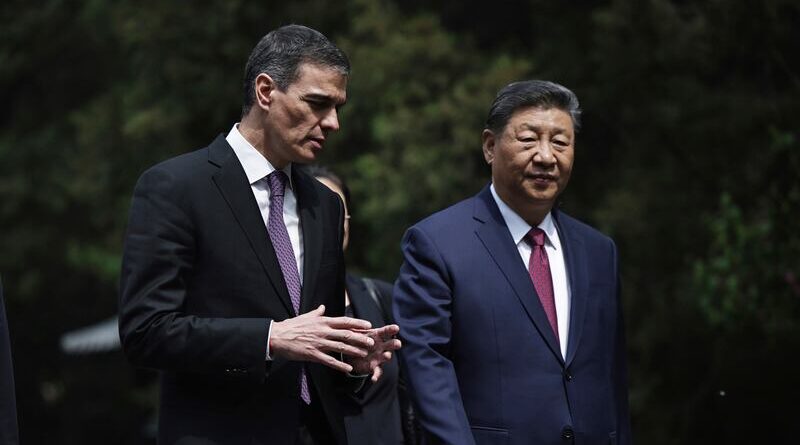
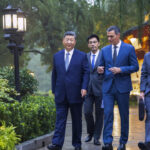
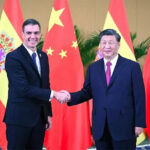
The barrage of criticism surrounding Pedro Sánchez's recent trip to China has been surprising. They say it's not "our side," that "there's more to Asia" than China (although the mission also included Vietnam), that the timing couldn't have been worse... However, the trip was a complete success, both in terms of the current situation and the expectations it met, judging by the official assessment provided by Moncloa.
It's clear that there's more to Asia than China. And we must work toward that goal. It's another matter to fail to recognize that China is the true lung of Asia. The comparison with India, the most comparable at first glance, doesn't stand up to the slightest scrutiny. While China, for example, could surpass the US GDP around 2030, India would not do so until 2075, according to Goldman Sachs' forecasts. Overtaking China, despite no longer having the cheap labor that India does, is nevertheless somewhat distant, light years away. Its neighbor's GDP ($19 trillion) is almost six times larger ($3,4 trillion), and its manufacturing industry accounts for half of production and a third of goods exports. Despite India's innovation efforts, Chinese graduates in digitalization areas outnumber Indians by twice as many, with an economy that spends only 0,7% on R&D compared to China's 2,5%. Furthermore, China accounts for more than half of the world's 5G networks, four of the 4 largest technology companies on the planet are Chinese, and, along with the United States, it is the only global producer of artificial intelligence (AI) with 20% of patents. It also has a greater productive capacity within its workforce and many advantages in wealth redistribution and poverty alleviation. And all of these are reasons to have a specific strategy for India, of course, but putting everyone in their place. One thing doesn't negate the other.
And which side is ours? That of Mr. "Neckcutter," who imposes inexcusable duties on Minister Cuerpo? Or that of Robert Palladino, chargé d'affaires of the US Embassy in Hungary, who has warned the Hungarian government to refrain from attracting Chinese investment? Or that of the new ambassador to Japan, George Glass, appealing to close ranks to counterattack China after harshly criticizing Lisbon, where he also served as the US representative, for its business dealings with China? Or that of Treasury Secretary Bessent himself, who, within the framework of Argentina's agreement with the IMF, demands that Buenos Aires end the swap with China? Or that of the one who scandalously pressures President Mulino's Panama to accept the return of US troops to the Canal? Or the diatribes of the incoming ambassador to Chile, Brandon Judd, pressuring Santiago to cancel the astronomical cooperation with China, citing security reasons? The US has nearly 80 military bases and locations in China's immediate vicinity...
The Trump administration's "advice-like" demands, citing national security or the trade deficit, pose a major challenge to the countries of the European Union. They should make their decisions freely and based on their own interests. This is what Pedro Sánchez has done, to the point of establishing this relationship with Beijing as a model for Europe. Or do we prefer the Meloni model? This is the other, far-right Europe that Trump feels comfortable with and the one he promotes without hesitation.
Washington demands that we all align ourselves with its agenda. The problem with China is not trade. This is just one variable in a geopolitical conflict in which Europe must take sides based on who aligns with its principles: the defense of free trade or multilateralism, the fight against climate change or the promotion of international cooperation. The response to the ongoing replacement of American "soft power" with "soft coercion" must be strategic autonomy solidly grounded in cooperation based on mutual interest. Cooperation is not a risk.
The relationship between Spain and China, like that of the European Union as a whole, must be built without sides. Escaping this dynamic, preserving basic decision-making sovereignty, is the greatest expression of strategic autonomy today. It is not China that is dividing the "democratic bloc," but Trump, with his aim of disrupting the international order to save his exclusive hegemony. Europe must be Europe and remain committed to basic rules that, strange as it may seem, now bring us closer to China in some not-so-minor matters.
As Trump's term progresses, it is likely that the tensions currently surrounding US-EU relations will evolve into a structural condition that will exacerbate the choice between community and national interests and strategic dependence. The US is driven by the pursuit of forced and almost total decoupling from the Chinese economy. In this context, as theBritish Chancellor of the Exchequer Rachel Reeves would be extremely senseless emulate disengagement by downplaying the need for continue economic cooperation.
Xulio Ríos is an emeritus advisor to the China Policy Observatory.
XULIO RIOS
- XULIO RIOS
- XULIO RIOS
- XULIO RIOS
- XULIO RIOS
- XULIO RIOS

- XULIO RIOS
- XULIO RIOS

- XULIO RIOS
- XULIO RIOS
- XULIO RIOS

- XULIO RIOS
- XULIO RIOS

- XULIO RIOS
- XULIO RIOS

- XULIO RIOS
- XULIO RIOS

- XULIO RIOS
- XULIO RIOS

- XULIO RIOS
- XULIO RIOS
- XULIO RIOS
- XULIO RIOS
- XULIO RIOS
- XULIO RIOS
- XULIO RIOS
- XULIO RIOS
- XULIO RIOS
- XULIO RIOS

- XULIO RIOS

- XULIO RIOS
- XULIO RIOS

- XULIO RIOS
- XULIO RIOS