The summit of the warning
XULIO RIOS
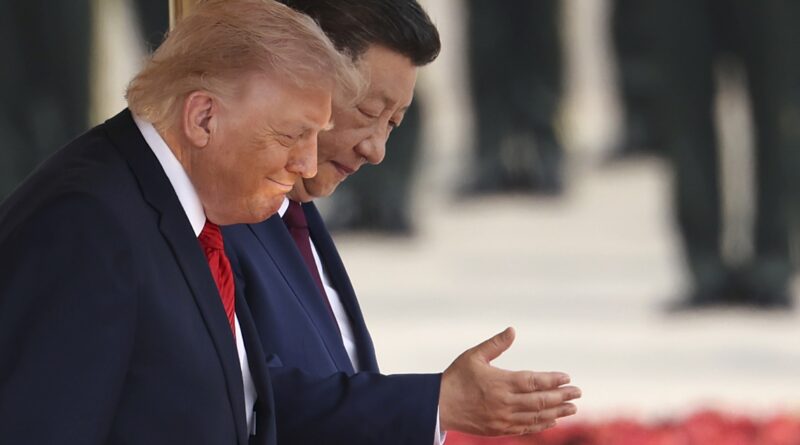
The top Xi-Trump in Beijing It was surrounded by an ostensibly optimistic tone and carefully choreographed diplomacy, but the actual outcome demands considerably more caution. Beyond the images and solemn declarations, there were no truly decisive announcements in either the trade or technology sectors, precisely the areas where the structural rivalry between the United States and China is currently concentrated. In fact, the negotiations previous The fact that the events in Seoul dragged on practically until the last minute suggests that the differences remain deep and difficult to manage.
Donald Trump praised the “fantastic trade deals” reached during the meeting, but, at least for now, no concrete commitments have been made that could substantially alter the existing dynamic. China, for its part, avoided confirming or denying the details mentioned by the US president regarding possible purchases of oil, soybeans, or other products. Everything suggests that, if specific agreements exist, they will be revealed gradually in the coming weeks as part of a phased communication strategy aimed at maintaining the impression of détente.
In reality, the underlying issue remains unchanged. Artificial intelligence and semiconductors continue to be the core of the competition between the two powers, and Washington does not seem willing to allow Beijing to close the technological gap in sectors considered strategic. The logic of technological containment remains fully in force and likely constitutes the main obstacle to any significant thaw in the bilateral relationship.
However, from the Chinese perspective, the most relevant aspect of the summit lies not so much in the potential trade agreements as in the political framework that Xi Jinping placed at the center of the meeting., in other words, The idea of “constructive strategic stability” as the horizon for relations between Beijing and Washington. In Chinese analyses, this expression carries enormous conceptual weight. The notion of “strategic stability” implies the acceptance of a managed relationship between two great powers considered essentially equal, rather than within a hierarchical order unilaterally dominated by the United States. The addition of “constructive” further introduces Beijing’s aspiration to move beyond mere passive stability based solely on crisis avoidance, proposing a relationship structured on mechanisms of mutual recognition and strategic accommodation.
From this perspective, Xi has achieved two significant political victories. The first is precisely the consolidation of this "equal" framework as the implicit basis for any present or future dialogue. China believes that the gains accumulated since the trade and technology war initiated during Trump's first term have allowed it to significantly strengthen its economic, industrial, and military position to the point of feeling ready to negotiate with Washington on a basis of strategic parity. Beijing also perceives the current difficulties facing the White House. -from the war with Iran to the international and domestic erosion of the US administration- as factors that increase their room for maneuver.
The second major issue was Taiwan, which reappeared even more centrally and explicitly than in previous bilateral meetings. The Chinese statement placed the island at the end of the text, but specifically underscored it as “the most important issue” in relations between the two countries. Beijing expects “concrete measures” from Washington, in the words of Wang Yi. Xi Jinping’s warning on Taiwan was particularly direct and unusual. At the Busan meeting the previous year, the issue barely surfaced; this time, however, the message was unequivocal. And in the Chinese political system, the fact that Xi himself publicly issued a warning of this magnitude gives the matter transcendental importance. as The bilateral relationship will depend, to a large extent, on how the United States handles the Taiwan issue.
In this context, the possibility takes on special importance. -pointed out by various middle fingers- Trump postponed the announcement of a new $14 billion arms sale package to Taiwan before meeting with Xi, after the likely largest arms sale to the island to date, worth around $11 billion, had already been approved. If Washington were to freeze or delay this new program, Beijing would interpret it as a significant sign of a readjustment in US support for Taiwan.
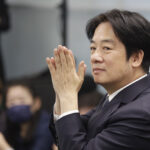
The internal situation in Taiwan also adds complexity to the scenario. Lai Ching-te is going through politically difficult months, embroiled in a draining confrontation with the opposition, which questions the increase in military spending to 5% of GDP demanded by the United States. Washington simultaneously insists on strengthening the island's defense capabilities and on avoiding any formal declaration of independence that could trigger an open conflict with China. This strategic ambiguity reflects the true American dilemma. well, although says do not wantr A war in the Taiwan Strait, nor does it want to give up using the Taiwan issue as an instrument of geopolitical pressure on Beijing.
In parallel, another crucial element is emerging: rare earth elements. China controls virtually all of the world's processing capacity for strategic minerals essential to advanced technological and military industries. The United States is pressing to regain stable access to these materials, while Beijing responds that supplying them is pointless. no restrictions These components would eventually be incorporated into weapons systems, F-35 fighter jets, or missiles potentially intended to militarily reinforce Taiwan against China itself. In this way, Beijing is making it clear that the Taiwan issue now conditions not only regional security, but virtually any economic, financial, or technological negotiation with Washington.
Taiwán has ceased to be not a secondary or deferred matter, but at the true point of articulation that defines nature of the relationship between China and the United States.
Xulio Ríos is an emeritus advisor at the Observatory of Chinese Politics
XULIO RIOS
- XULIO RIOS

- XULIO RIOS
- XULIO RIOS

- XULIO RIOS
- XULIO RIOS
- XULIO RIOS
- XULIO RIOS

- XULIO RIOS

- XULIO RIOS

- XULIO RIOS
- XULIO RIOS

- XULIO RIOS
- XULIO RIOS
- XULIO RIOS
- XULIO RIOS

- XULIO RIOS
- XULIO RIOS
- XULIO RIOS
- XULIO RIOS
- XULIO RIOS
- XULIO RIOS
- XULIO RIOS
- XULIO RIOS
- XULIO RIOS
- XULIO RIOS

- XULIO RIOS

- XULIO RIOS

- XULIO RIOS

- XULIO RIOS
- XULIO RIOS